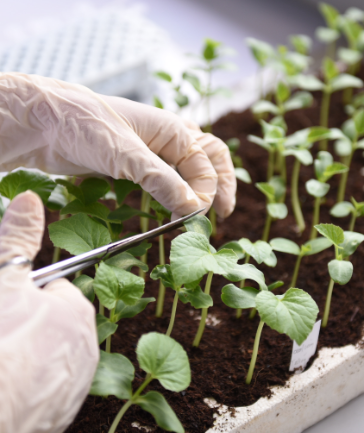

Bred in the laboratory

Two parents, one precise cross

Cross-pollination seed is produced by transferring the pollen grains of one carefully selected parent plant to the flowers of another. At Zinbioseed this is done by hand, precisely and under laboratory control, so that every seed comes from a known cross and carries the chosen characteristics of both parents.

Our programme has produced two seed lines, each bred for a different goal: Bioganic Seeds from a cross of Lemonier Peruzzi and chamomile, selected for genetic variation, and a cross of black peas and black seeds, selected for genetic uniformity.

  • Every seed from a known, recorded cross
  • Pollination done by hand under laboratory control
  • Every seed lot tested for germination before sale
A scientist's gloved hand adding a drop to a young plant in a test tube

Our cross-pollination seeds

Two crosses, two breeding goals

Both seed lines come from the same laboratory programme, but they are bred for opposite purposes: one gives diversity to select from, the other gives consistency to rely on.

Bioganic Seeds · Genetic variation Zinbioseed pack of Lemonier Peruzzi × Chamomile Bioganic Seeds
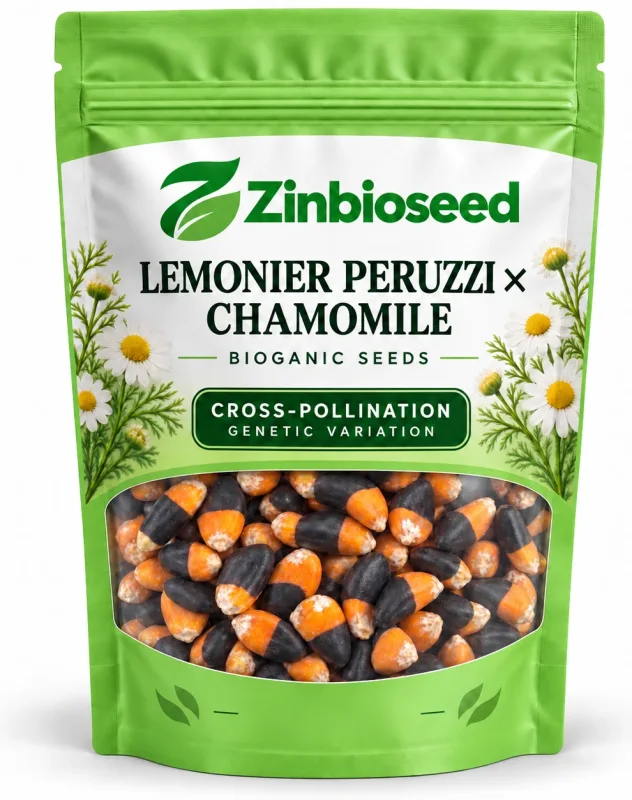
Lemonier Peruzzi Ă— Chamomile

Bioganic Seeds, bred for genetic variation

Parents
Lemonier Peruzzi Ă— chamomile
Genetics
Genetic variation
Crop type
Long-term crop
To first fruit
Several years

Our Bioganic Seeds come from the cross-pollination of Lemonier Peruzzi and chamomile. Pollen from one parent is transferred by hand to the prepared flowers of the other under laboratory control, and the seed that results carries genetic variation: the plants it produces are not identical, but combine their parents' characteristics in different ways. This diversity makes the line a strong base for selection, so growers and breeders can keep the plants that perform best in their own soil and climate. It is a long-term crop that takes several years to mature and bear fruit.

  • Hand cross-pollination of Lemonier Peruzzi and chamomile under laboratory control
  • Genetic variation: a diverse population rather than identical plants
  • A strong base for selecting plants suited to local conditions
  • A long-term crop: several years from planting to first fruit
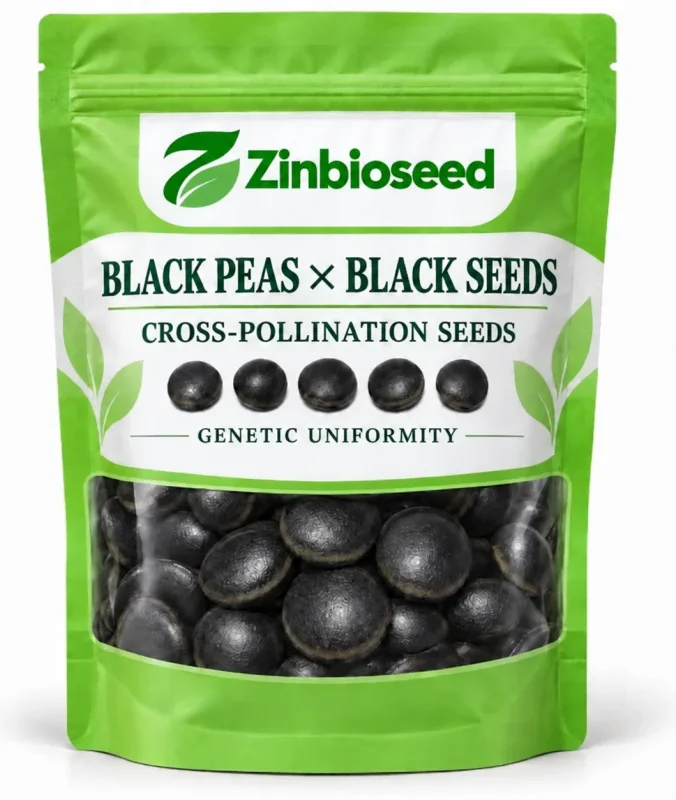
Genetic uniformity Zinbioseed pack of Black Peas Ă— Black Seeds cross-pollination seeds

Black Pea Ă— Black Seed

A cross bred for genetic uniformity

Parents
Black peas Ă— black seeds
Genetics
Genetic uniformity

This seed line comes from the cross-pollination of black peas and black seeds, made by hand under the same laboratory control. It is bred for genetic uniformity: the plants share the same genetic make-up, so they emerge, grow, flower and mature evenly, and give a consistent, predictable crop from one field, and one season, to the next.

  • Hand cross-pollination of black peas and black seeds under laboratory control
  • Genetic uniformity: plants that grow and mature evenly
  • Consistent quality from one planting to the next
  • Simpler crop planning, management and harvest

Variation or uniformity?

Choosing the right seed line

The two lines behave differently in the field. This comparison shows which one suits your goals.

Lemonier Peruzzi Ă— Chamomile Black Pea Ă— Black Seed
Genetics Genetic variation Genetic uniformity
In the field Diverse plants, each combining its parents' traits in its own way Even plants that look, grow and mature alike
Best for Selection, breeding and adapting to local conditions Commercial crops that need consistent quality
Planning A long-term crop: several years to first fruit Even maturity makes harvest timing predictable
Gloved hands working on young seedlings with fine laboratory tools

How a cross is made

Precision at every step

Cross-pollination only works when it is controlled. Every cross follows the same careful laboratory routine.

  1. Choosing the parents

    Parents are chosen for the result the cross should give: contrasting characteristics for the variation line, and matched, stable characteristics for the uniform line.

  2. Preparing the flowers

    On the female parent, the anthers are removed from each flower before they shed pollen, so the plant cannot pollinate itself.

  3. Collecting the pollen

    Pollen grains are gathered from the male parent at the right stage and checked under the microscope to make sure they are viable.

  4. Hand pollination

    The pollen is applied precisely to the stigma of each prepared flower, which is then covered and labelled so no stray pollen can reach it.

  5. Harvest and testing

    Seed is harvested from the pollinated fruit, cleaned and dried, then tested for germination and seed health before it is packed.

Why it matters

What a controlled cross gives growers

  • Known parentage

    Every seed comes from a recorded cross of two known parents, and each seed lot can be traced back to it.

  • Diversity to select from

    The Lemonier Peruzzi Ă— chamomile cross gives a varied population, a strong base for selection and adaptation.

  • Consistency to rely on

    The black pea Ă— black seed cross gives even, predictable plants and uniform quality.

  • Laboratory precision

    Hand pollination under controlled conditions, with every flower covered and labelled, keeps each cross true to plan.

Seed saved from the harvest will not reliably reproduce the qualities of the original cross, so every new planting should start from fresh Zinbioseed seed.

Grow our cross-pollination seeds

Tell us about your farm and your crop plans, and our team will advise on availability and the right seed line for you, including how to plan for the years the Lemonier Peruzzi Ă— chamomile cross takes to bear fruit.

M2WJ+46, Kasonaweja, Mamberamo Tengah, Mamberamo Raya Regency, Papua 99376, Indonesia